

Gateway to Learning
Want to invest in crypto but don't know where to start?
Learn crypto through the simplest words.
Featured Courses
More
Intermediate
Introduction to Flare (FLR)
This course provides a structured overview of the Flare Network (FLR), a Layer 1 blockchain designed to support smart contracts, decentralized data access, and cross-chain interoperability. Through technical modules, learners will understand how Flare integrates external data into on-chain applications, supports non-smart contract assets, and maintains network security and governance. The course is intended for those seeking practical knowledge of Flare’s architecture, tokenomics, protocol features, and governance systems.
Advanced
Tools That Help You Trade Better: Moving Averages, Trend Lines, and Indicators
There are no trading rules that are applicable to any scenario. These courses will help you establish your own trading strategy, then test it and improve on it in practice
Intermediate
L1 Deep Dives: Hyperliquid (HYPE)
This course provides a detailed exploration of Hyperliquid, a high-performance decentralized exchange (DEX) built on its proprietary Layer 1 blockchain. Designed for advanced users, developers, and blockchain enthusiasts, the course delves into Hyperliquid's technical architecture, tokenomics, strategic partnerships, governance mechanisms, and its role in the evolving DeFi landscape.
Learn by Topic
Topics
Altcoins
Bitcoin
Blockchain
DeFi
Ethereum
Metaverse
NFT
Trading
Tutorial
Futures
Quant Trading
BRC-20
GameFi
DAO
Macro Trends
Wallets
Inscription
Technology
Meme
AI
SocialFi
DePin
StableCoin
Liquid Staking
Finance
RWA
Modular Blockchains
Zero-Knowledge Proof
Restaking
Crypto Tools
Airdrop
Gate Products
Security
Project Analysis
CryptoPulse
Research
TON Ecosystem
Layer 2
Solana
Payments
Mining
Hot Topics
P2P
Sui Ecosystem
Chain Abstraction
Options
Quick Reads
Video
Daily Report
Market Forecast
Trading Bots
VIP Weekly Industry Report
ETF
Top Stories
XRP
Pi Network
VIP Daily Industry Report
In-Depth Research
Gate Ventures
Weekly Report
Investment News
Perpetual DEX
Web3 For Beginners
Tron
Base
Protocols
DApp
Crypto Card
BNB Chain
Gate Private Wealth Management
Platform Highlights
Brand Videos
Product Tutorial Videos
The Latest News
TradFi
Difficulty
Beginner
Intermediate
Advanced
Latest Courses
More
Intermediate
AI-Driven Asset Allocation Revolution: From Quantitative Models to Autonomous Investment Decision Systems
This course starts from the development trends at the intersection of AI and finance, providing a systematic understanding of how intelligent investment systems are gradually transforming traditional asset allocation logic. As data scales expand, market structures grow more complex, and AI technology advances rapidly, financial markets are shifting from being "experience-driven" to "data- and model-driven." The course combines quantitative models, on-chain data, AI Agents, and intelligent trading ecosystems to deconstruct how AI is redefining investment research, risk management, and asset allocation processes. Through comprehensive framework learning, you will gain a deeper understanding of the future direction of financial systems and autonomous investment decision-making systems.

Intermediate
How Institutional Capital Enters On-Chain Markets: The Evolution of ETFs, Custody, and Crypto Financial Infrastructure
This course starts from the perspective of institutional capital flows, providing a systematic analysis of how traditional finance is gradually entering the crypto market and driving the evolution of the broader digital financial ecosystem. As ETFs, institutional custody, stablecoins, and on-chain financial infrastructure continue to mature, crypto assets are transitioning from the periphery of the market to becoming increasingly integrated into the global capital system. The course not only focuses on the logic behind institutional entry but also delves into multi-asset markets, on-chain liquidity, and the convergence trends with TradFi. Through comprehensive structured learning, you will gain a deeper understanding of the future direction of financial system digitization and on-chain transformation.

Intermediate
U.S. Stocks and ETFs Explained: A Crypto Trader’s Guide to Traditional Markets
The U.S. stock and ETF markets are centered on fiat-denominated securities, with pricing and trade execution conducted through exchange matching during fixed trading sessions. Their regulatory frameworks, corporate actions, and disclosure logic differ significantly from the 24/7 cryptocurrency market. For users who primarily hold crypto assets over the long term, the securities market serves not only as an important reference for macro risk appetite but also as a potential extension for asset allocation. However, participating without understanding trading hours, instrument differences, and regulatory boundaries can lead to the misstep of "applying crypto trading habits to stock investing."
Latest Articles
More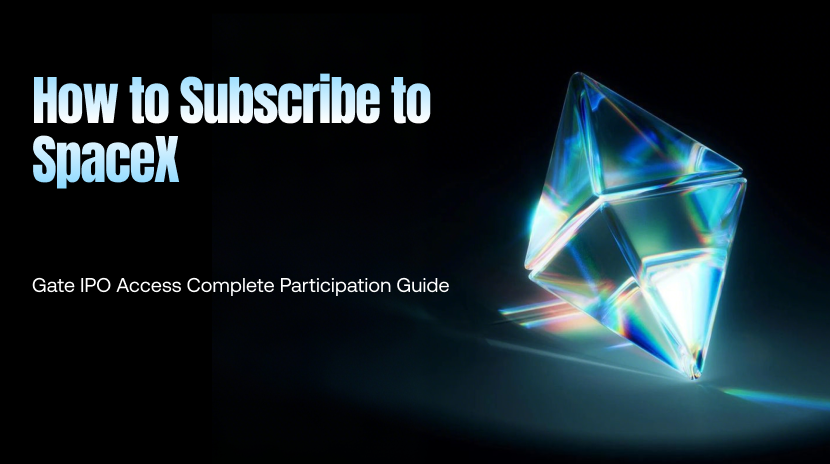
Beginner
How to Subscribe to SpaceX? Gate's Direct IPO (IPO Access) Complete Participation Guide
Gate IPO Access is a direct IPO service offered by Gate, enabling users to digitally express their interest in subscribing to IPO projects like SpaceX. During the campaign, users submit subscription applications using USDT. The system calculates allocation weights based on the average locked amount during the subscription period and finalizes distribution based on the actual stock quota received by the platform.
2026-06-24 12:57:26
Beginner
What Are the Risks of DeFi Vaults? Understanding On-Chain Vault Risks at a Glance, from Smart Contracts to Strategy Failures
While DeFi Vault can simplify operations and improve capital efficiency, it is not entirely risk-free. Risks ranging from smart contract vulnerabilities and strategy management errors to liquidity risk and market volatility can all affect investment outcomes.
2026-06-24 11:50:15
Beginner
Key Risks of DeFi Vaults: Understanding Smart Contract, Strategy and Liquidity Risks
What Is a DeFi Vault? This article breaks down how vaults operate, where Rendement comes from, how automated strategy management works, and what risk control mechanisms are in place — giving you a clear view of how on-chain asset management boosts DeFi capital efficiency.
2026-06-24 11:44:46